About me
Heyday Doula Valentina
I've been a doula since 2014 — twelve years of being with women on the most important day of their lives. In that time I've supported hundreds of families through birth and through the first weeks at home.
I trained first in 2013 and I haven't stopped since: birth doula, postnatal doula, maternity nurse, accredited KG Hypnobirthing teacher, antenatal educator, rebozo, reflexology for childbirth, infant massage, the infant microbiome.
I trained as a maternity nurse — and I chose the word doula. A maternity nurse looks after the baby. I look after you both.
I support evidence and I read the research. And at the same time I don't believe birth is a medical procedure. A woman can give birth herself. What she needs is preparation, and someone beside her who won't let her get lost.
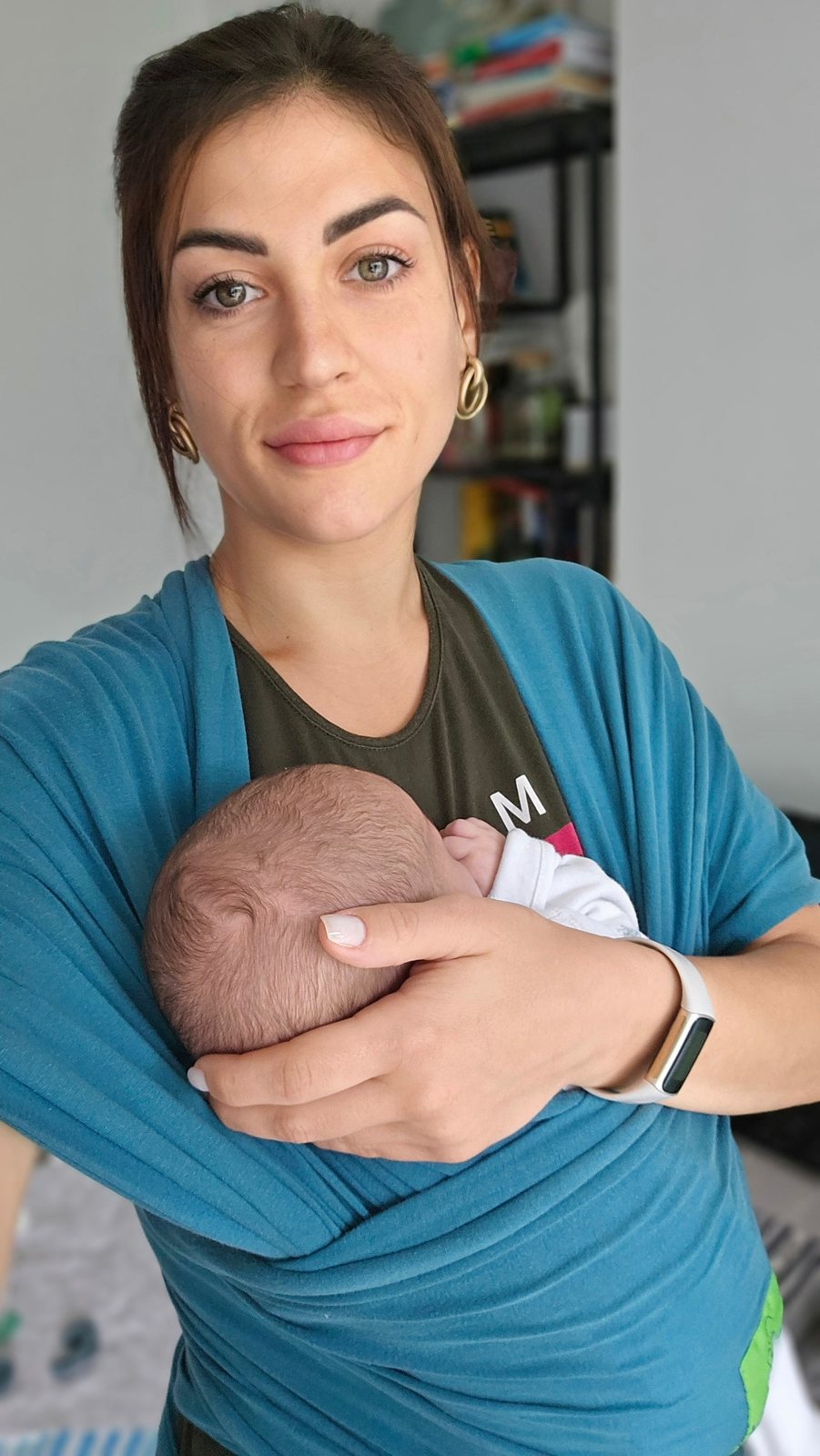
Recognised, insured and checked
Public liability insurance · current DBS check · first aid and paediatric first aid updated October 2025 · a backup doula arranged for every client
Where I work
I work across all of London — every hospital and birth centre in the city, and home births too. I'm most often in central London, but where you give birth is your decision, not a matter of my postcode.
If you haven't chosen your unit yet, that is one of the first things we can do together. I know how these places differ in practice rather than on paper, and I'll help you pick the one that fits the birth you want.
What I've been part of
Twins — I have supported several families having twins, and I know how differently those births are planned and managed.
VBAC — I have been beside many women giving birth after a caesarean. It is a birth that needs its own preparation: the questions worth asking early, the parts of the plan that are genuinely yours to choose, and someone in the room who has seen it go well before.
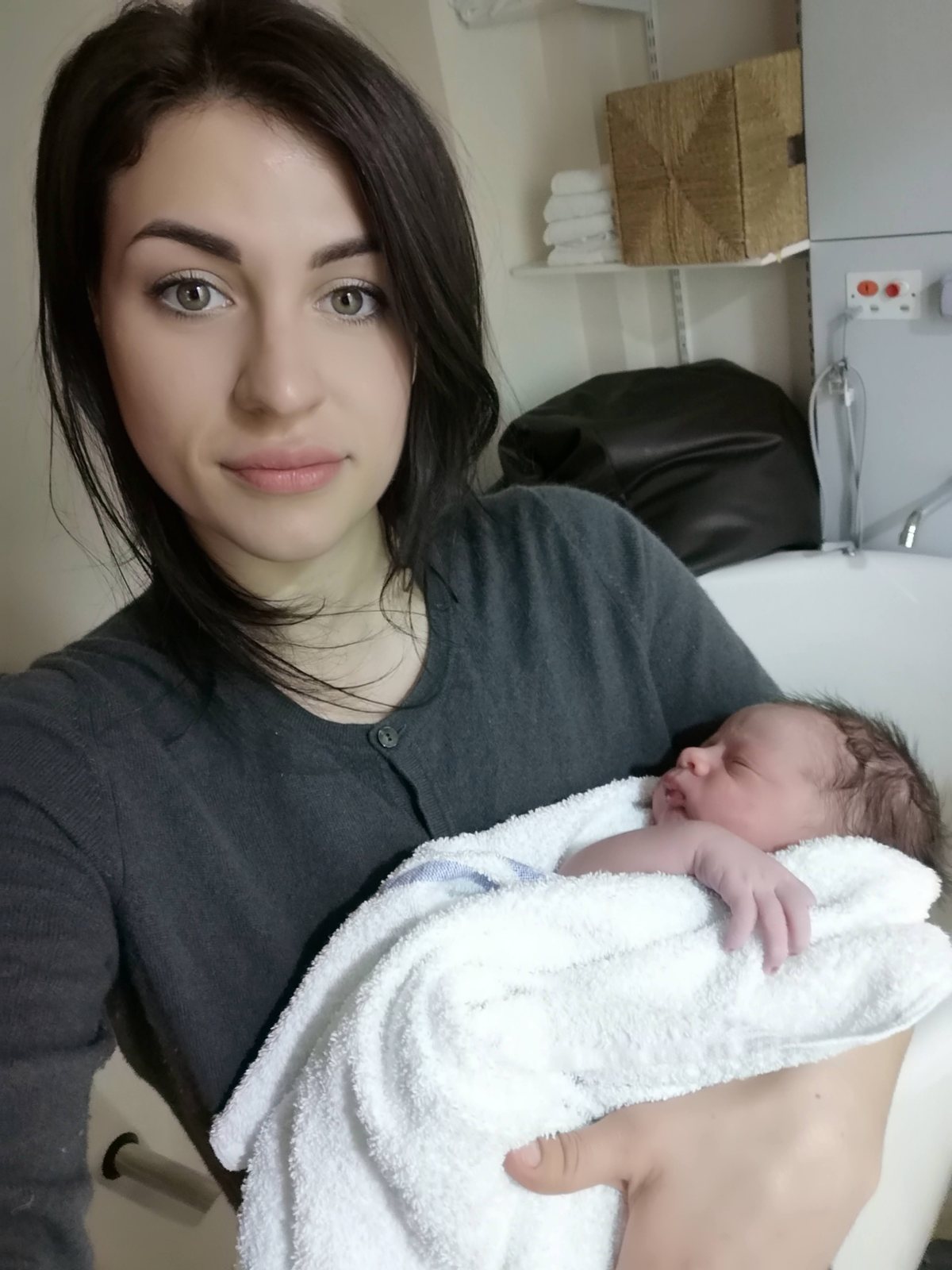
Who I trained with
I started training in 2013 and I have never stopped. Some of it I learned from people whose names you may already know — and I went to them in person.
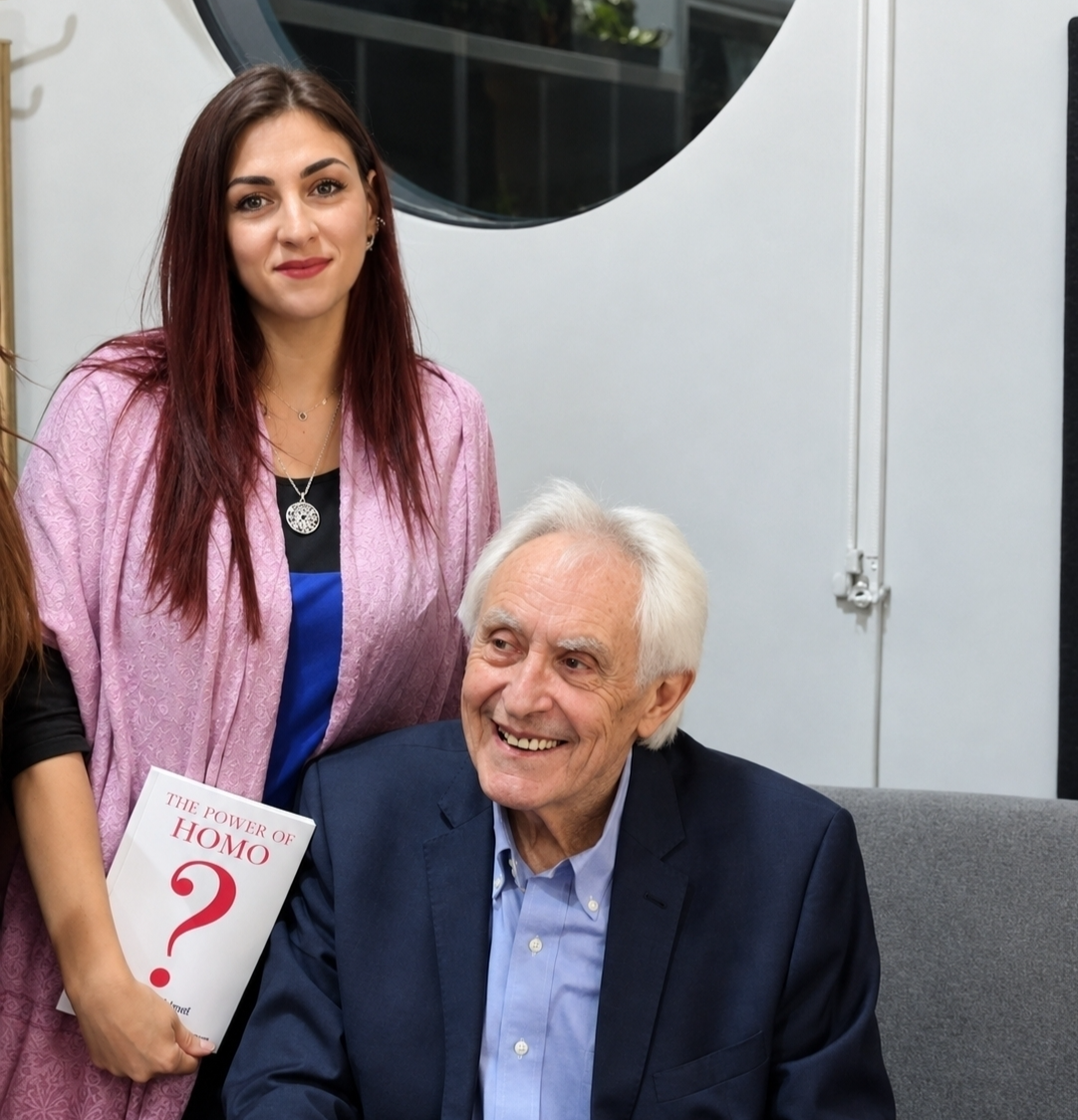
Physiology of birth
Michel Odent
The French obstetrician who brought birthing pools and home-like birthing rooms into hospital practice, and who has spent his life asking one question: what does a woman actually need in order to give birth without being disturbed?
He created the Primal Health Research database, has written thirteen books published in twenty-two languages, and has authored or co-authored around ninety papers listed on PubMed.
What I took from him: that my first job in the room is to protect the space — quiet, dim, warm, unobserved — because a labouring woman's physiology answers to that far more than to encouragement.
Rebozo and hands-on work
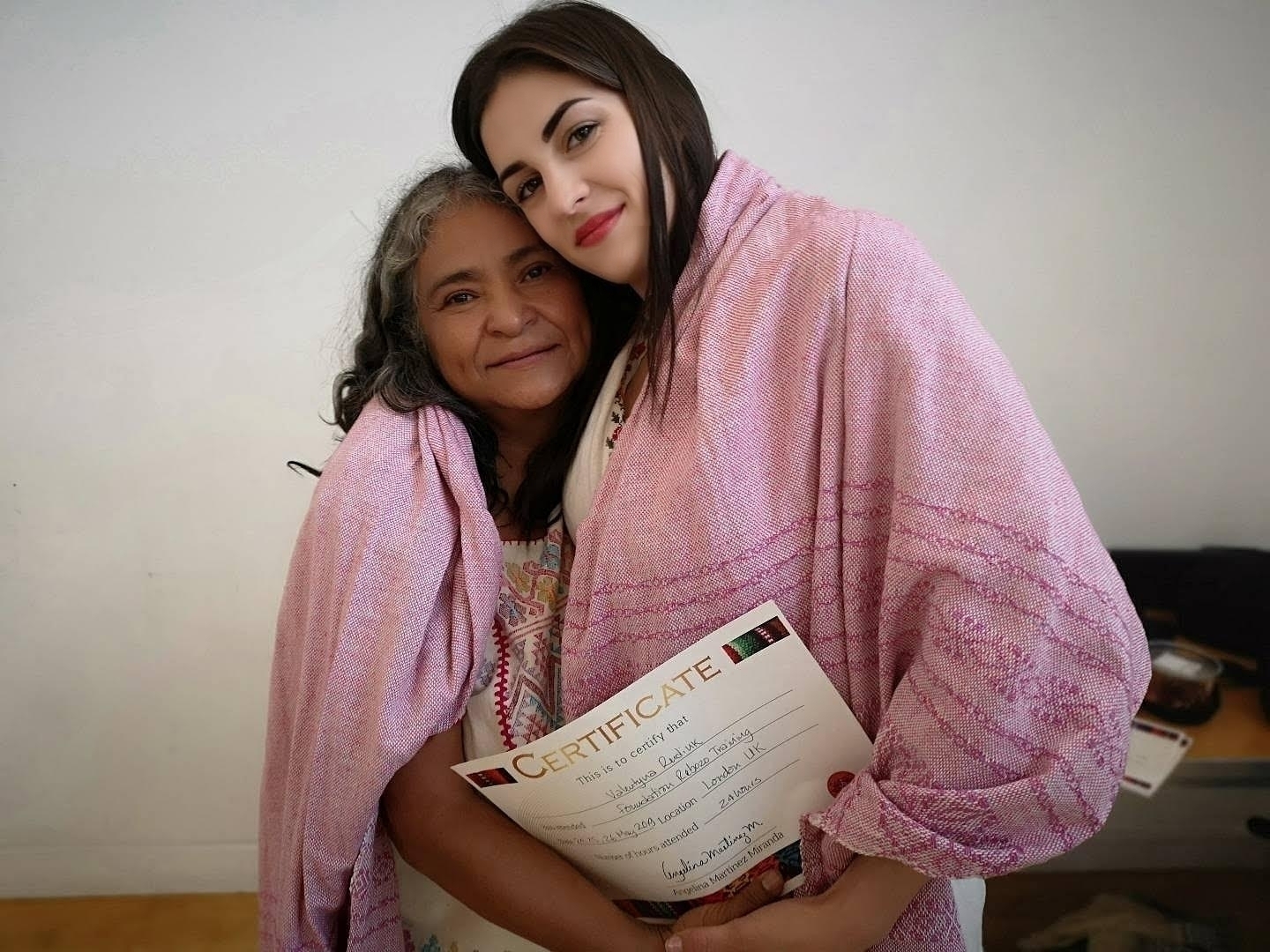
Angelina Martinez Miranda
A traditional midwife — partera — from Morelos, Mexico, who over her life has attended around 15,000 births. She is a long-standing member of the Midwives Alliance of North America and teaches internationally; you can read about her at Midwifery Today.
I completed her foundation training in Mexican rebozo — the woven shawl used to relax the pelvis, ease a baby into a better position, and give a labouring woman rest between contractions.
What I took from her: hands. Fifteen thousand births' worth of knowing what to do with them, and when to do nothing at all.
Postnatal recovery
Dr Rocío Alarcón
An Ecuadorian ethnobotanist with a PhD, born in the Andes at the foot of Pichincha, who has spent decades recording the healing traditions of her country and teaches through the IAMOE Center.
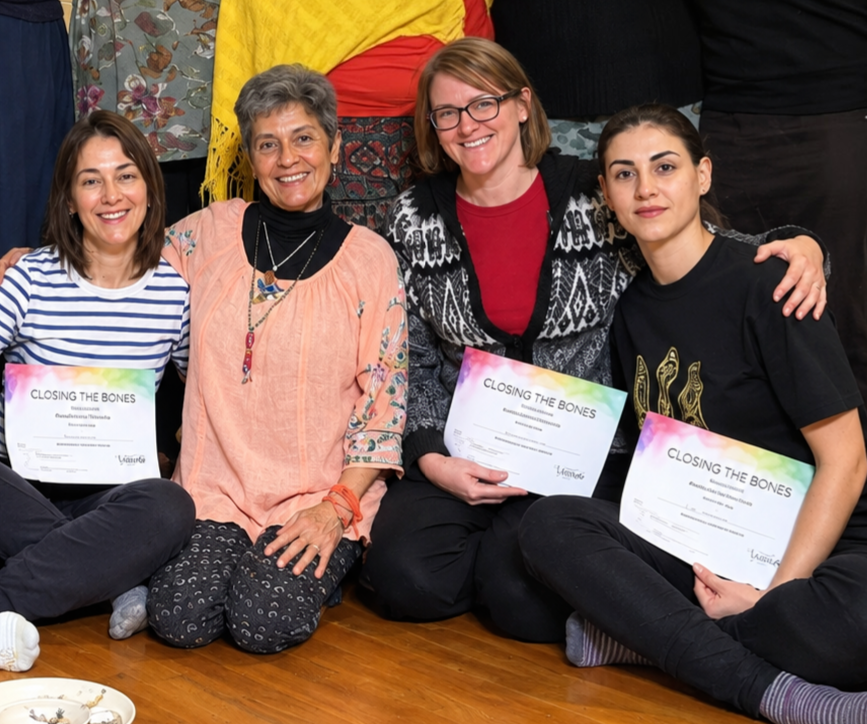
I trained with her in «closing the bones» — the Ecuadorian postnatal ceremony of wrapping and massage, known there as cerrada, given to a woman after birth to close what pregnancy opened.
What I took from her: that the postnatal period deserves a ritual of its own. In Britain a woman is usually discharged and left to it. This is one way of marking that something enormous has happened to her body.
Between the three of them: the physiology, the hands, and the recovery.
Training
I started in 2013 and I haven't stopped since. Some of these courses were years ago and some were this year — what matters is that they are all still in use.
Doula training
- First birth and postnatal course — birth, postnatal care and breastfeeding
- Developing Doulas preparation course
- Homebirth study day for doulas
- Waterbirth workshop
Comfort and bodywork in labour
- Foundation Mexican Rebozo training with Angelina Martinez Miranda
- Reflexology for childbirth
- Aromatherapy, acupressure and massage for birth
Hypnobirthing and teaching
- Hypnobirthing and Antenatal Educator Diploma, KG Hypnobirthing — with Nancy Keen and Kemi Johnson
- Antenatal educator course with Doula.ru
Postnatal, feeding and the newborn
- Maternity nurse training
- Holistic postpartum recovery
- «Closing the bones» postnatal ceremony with Dr Rocío Alarcón
- The Infant Microbiome, Microbirth School
- Infant massage training with IAIM — I use it in postnatal visits and teach parents the basics, rather than offering it as a separate service
Kept current
- First aid and paediatric first aid — last updated October 2025
Shall we talk?
Thirty minutes on WhatsApp or over a coffee, free and with no obligation.
