Birth & postnatal doula · London
Twelve years beside women in birth
I'm Valentina — a Recognised birth and postnatal doula in London. Since 2014 I've supported hundreds of families through pregnancy, birth and the weeks that follow, in hospitals and birth centres right across the city.
Whatever happens in that room, I have probably been there before.
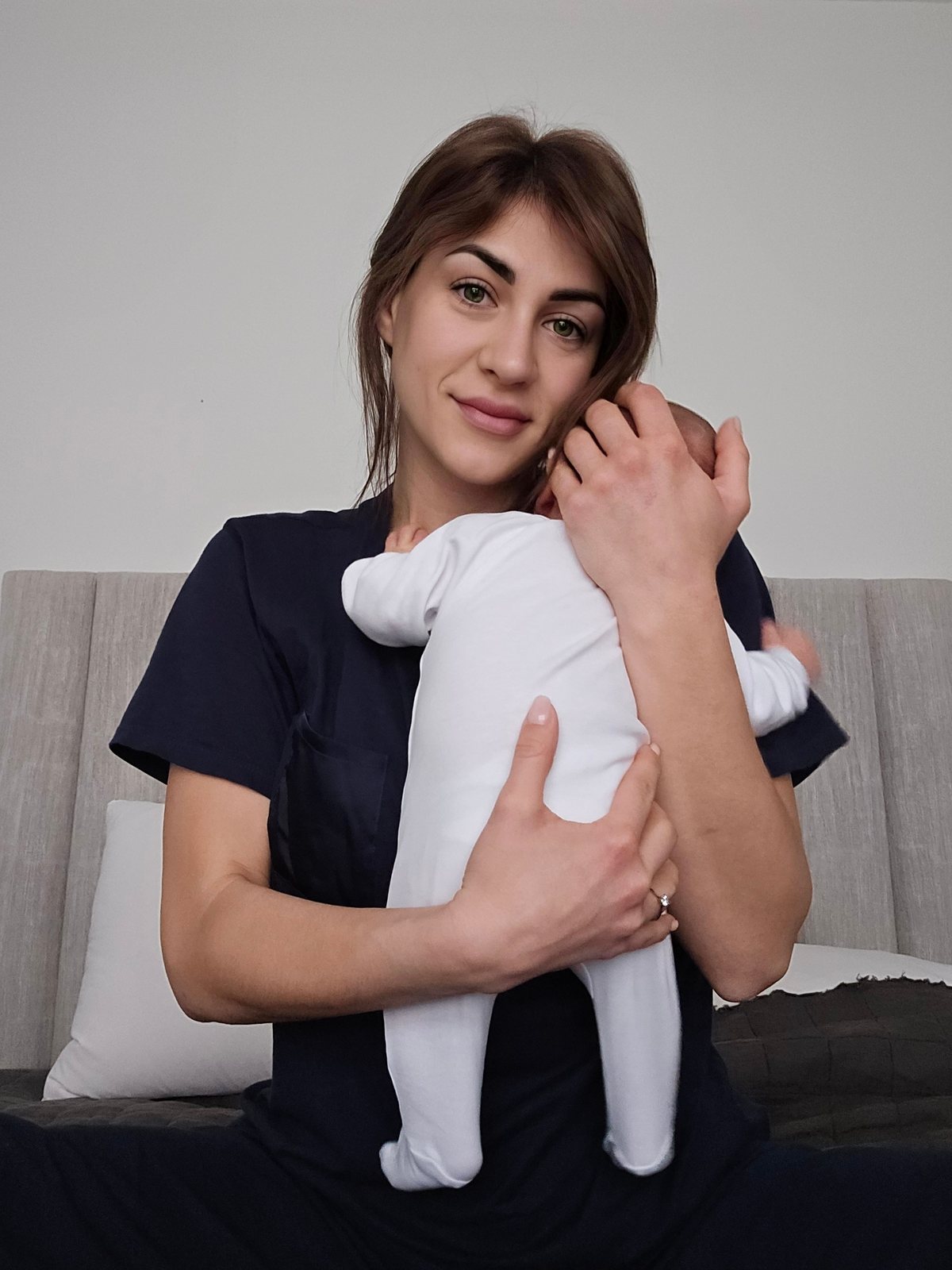
How I can support you
Birth doula
Preparation, someone beside you through the whole of labour, and the first hours with your baby. On call for you from 38 to 42 weeks, day and night.
Read morePostnatal doula
Days and nights at home in the first weeks — feeding, recovery, sleep, and how you are doing in all of it.
Read morePlanned caesarean
A caesarean is a birth too. Preparation for the day, support in theatre where your hospital allows it, and help while you recover.
Read moreWe'll probably work well together if…
- you want to understand your choices rather than be told what to do
- you'd like to prepare properly, not just hope for the best
- you want the same person beside you from the first contraction to the first feed
- you want someone in the room who has seen this many times and isn't frightened
And if none of that sounds like you — that is useful to know too. Let's have the free call and find out.
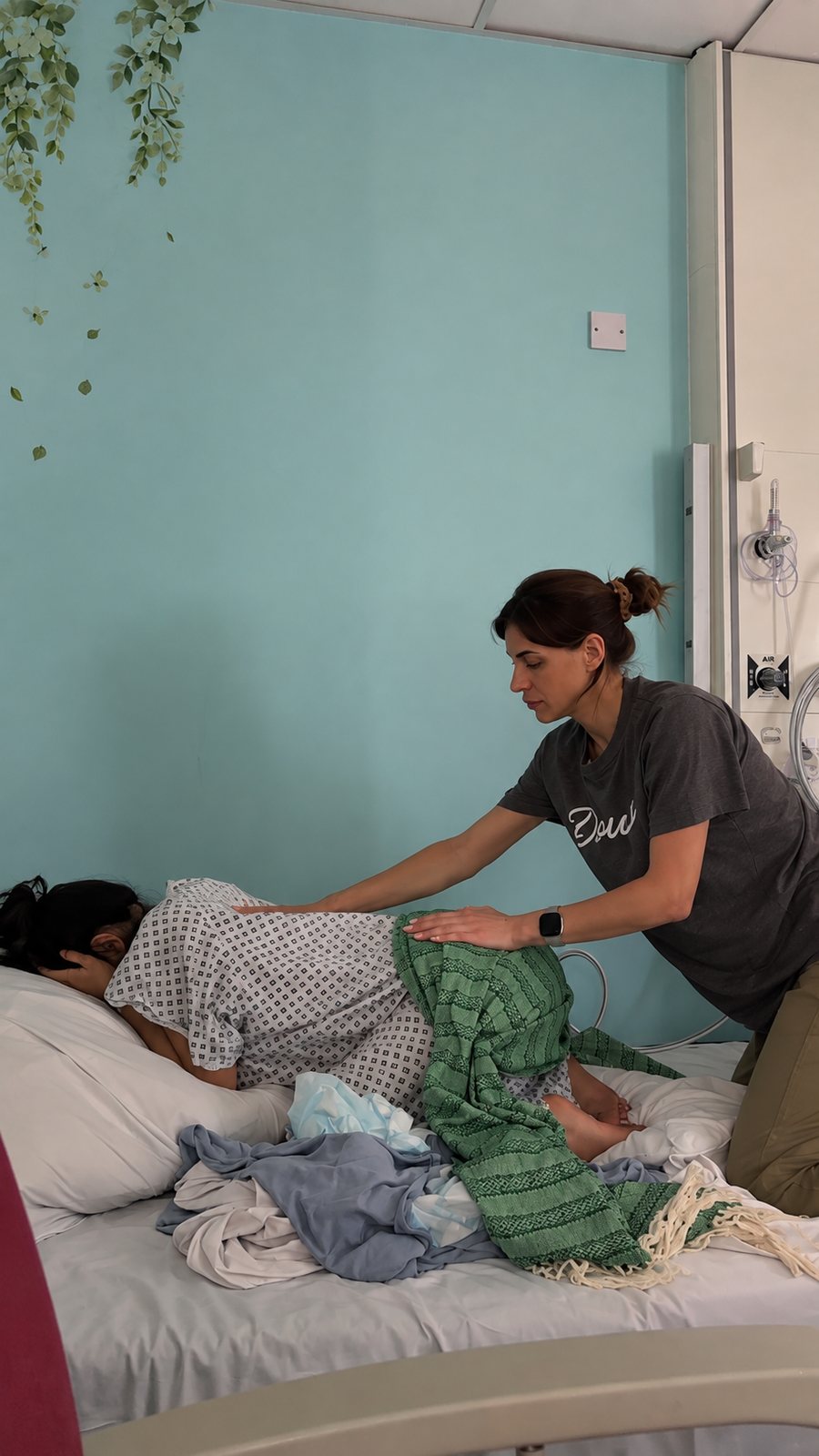
Why a doula
What you are actually buying
Not a luxury, and not a nicer version of your partner. You are buying the one thing the maternity system cannot give you: a person who knows you, knows birth, and does not leave.
Because the room is full of strangers. Your midwife is skilled and she does care. She is also looking after other women, writing notes, and going home at the end of her shift, because midwives work in shifts. Your notes travel with you. Everything else has to be explained again.
Because decisions arrive fast, and they arrive to a woman in labour. Someone will say a word you don't know, in a tone that suggests there is no time. Sometimes there is no time. Very often there is — twenty minutes, an hour, a whole night. I know how these conversations go and where the room for a question actually is, so you get to make the decision rather than have it made around you.
Because your partner should be your partner, not the project manager. He is in that room for the first time in his life and he is at least as frightened as you are. Asked to be both your comfort and your advocate, he can rarely be either. I take the second job so he can do the first one properly. Afterwards it is often the partner who says it out loud: that he was looked after too, and not only her.
Because how you remember it lasts. Women describe their births in detail decades later. The difference between «I chose this» and «it was decided for me» is what stays. That is the part I am most stubborn about.
And because the research agrees. A Cochrane review of continuous support in labour — 26 trials, almost 16,000 women — found those with continuous support were more likely to have a spontaneous vaginal birth, less likely to have a caesarean or an instrumental birth, less likely to need pain relief, and had shorter labours. The effect was strongest when the support came from someone in a doula role: not hospital staff, not a member of the family. Nothing about birth can be promised. But of everything you could add to your birth, this is the one with the most evidence behind it.
Who I trained with
I started training in 2013 and I have never stopped. Some of it I learned from people whose names you may already know — and I went to them in person.
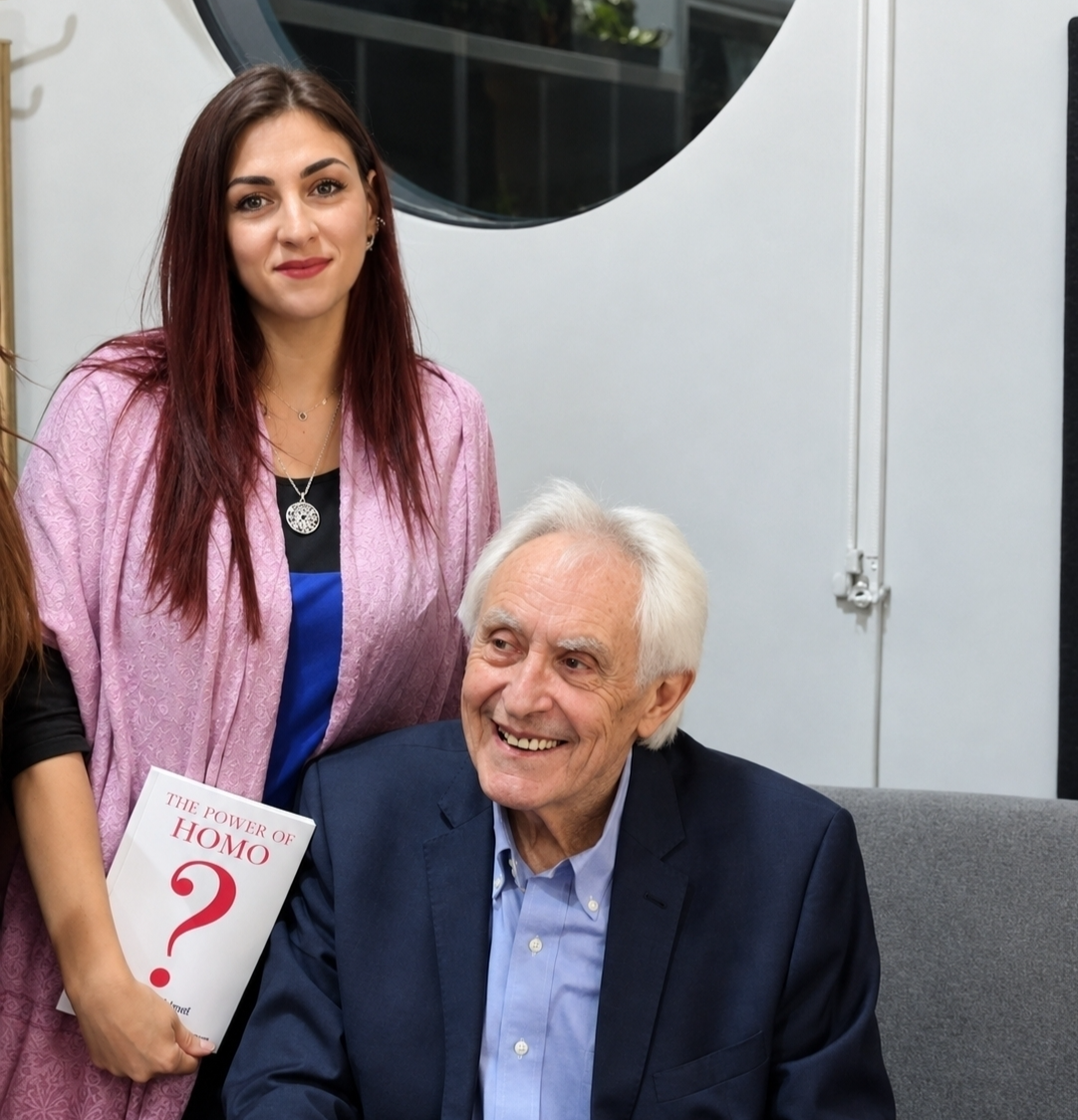
Physiology of birth
Michel Odent
The French obstetrician who brought birthing pools and home-like birthing rooms into hospital practice, and who has spent his life asking one question: what does a woman actually need in order to give birth without being disturbed?
He created the Primal Health Research database, has written thirteen books published in twenty-two languages, and has authored or co-authored around ninety papers listed on PubMed.
What I took from him: that my first job in the room is to protect the space — quiet, dim, warm, unobserved — because a labouring woman's physiology answers to that far more than to encouragement.
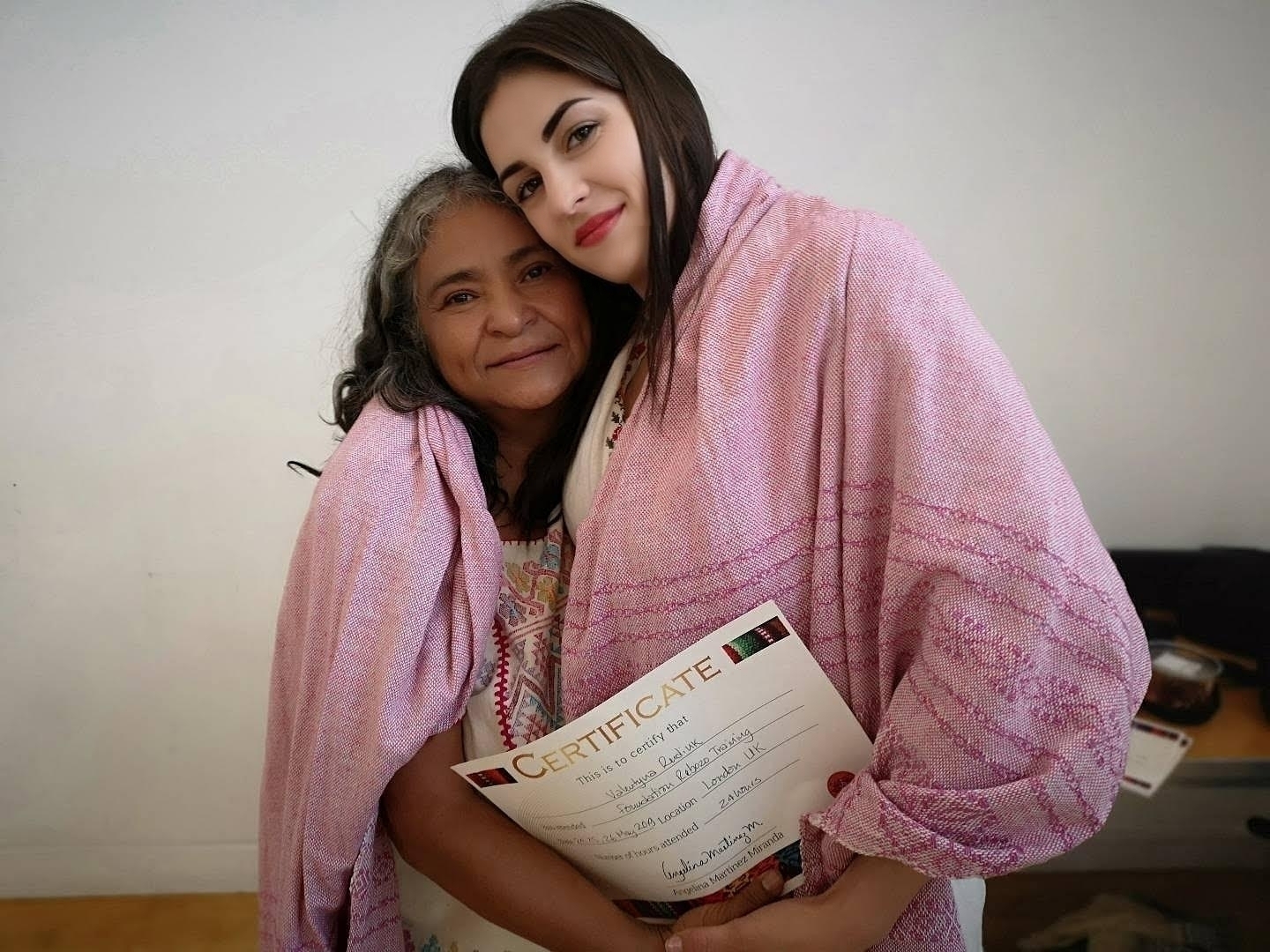
Rebozo and hands-on work
Angelina Martinez Miranda
A traditional midwife — partera — from Morelos, Mexico, who over her life has attended around 15,000 births. She is a long-standing member of the Midwives Alliance of North America and teaches internationally; you can read about her at Midwifery Today.
I completed her foundation training in Mexican rebozo — the woven shawl used to relax the pelvis, ease a baby into a better position, and give a labouring woman rest between contractions.
What I took from her: hands. Fifteen thousand births' worth of knowing what to do with them, and when to do nothing at all.
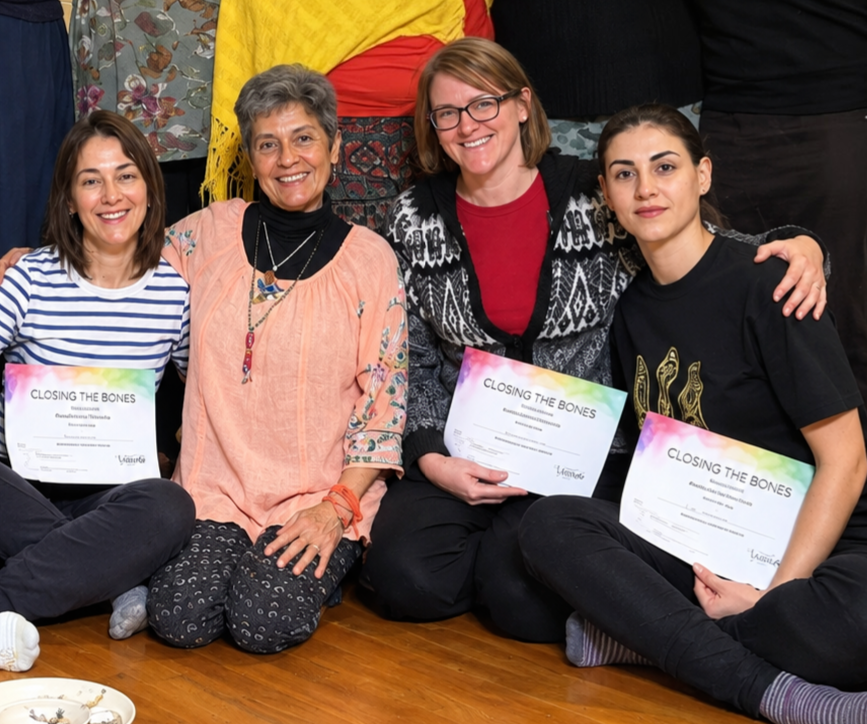
Postnatal recovery
Dr Rocío Alarcón
An Ecuadorian ethnobotanist with a PhD, born in the Andes at the foot of Pichincha, who has spent decades recording the healing traditions of her country and teaches through the IAMOE Center.
I trained with her in «closing the bones» — the Ecuadorian postnatal ceremony of wrapping and massage, known there as cerrada, given to a woman after birth to close what pregnancy opened.
What I took from her: that the postnatal period deserves a ritual of its own. In Britain a woman is usually discharged and left to it. This is one way of marking that something enormous has happened to her body.
Between the three of them: the physiology, the hands, and the recovery.
Preparation
More than 600 women have prepared for birth with me
Alongside my doula work I have taught live antenatal courses to over six hundred women, and I run a Facebook community for Russian-speaking mothers-to-be in the UK. Most of what I know about what actually frightens women before birth, I learned there — from the questions they really ask, not the ones books answer.
So the preparation sessions are not a course I deliver. We start from what is actually worrying you, and I bring what I have seen work — and what I have seen women wish they had known beforehand.
What families say
So grateful to Valentina for her incredible support throughout my pregnancy, birth, and postnatal period. Her calm presence, knowledge, and genuine care made such a difference at every stage. I truly couldn't have asked for better support.
— Katerina CalpaneThis was my first birth, and I was very nervous and completely unsure how to handle children. Valentina was incredibly helpful and taught me a lot about childcare, and she also helped me get used to this completely new role. My baby even began to recognise her and was very happy when she came. If I have a second child, I will definitely contact Valentina again.
— Alexandra BakroShe is a really nice, professional specialist. She knows her job and gives a lot of support. She answered all my questions and I was not nervous. It was my first pregnancy and I took a course with her, so I understood all the stages and knew what to expect.
— Olga BelenkayaLet's talk first — it's free
Thirty minutes, no obligation. You can ask me anything, and I'll ask you quite a lot. By the end you'll know whether I'm the right person for your birth.
