Russian & Ukrainian speaking · London
A Russian-speaking doula in London
I'm Valentina — a Recognised birth and postnatal doula in London, working since 2014. I work in Russian, Ukrainian and English: you can prepare in whichever language you think in, ask me anything in it, and have someone beside you in labour who speaks it — while still being understood by everyone else in the room.
And if nobody has ever explained to you how maternity care actually works in Britain, that is where we start. It is not a small thing to have sorted out well before the day.
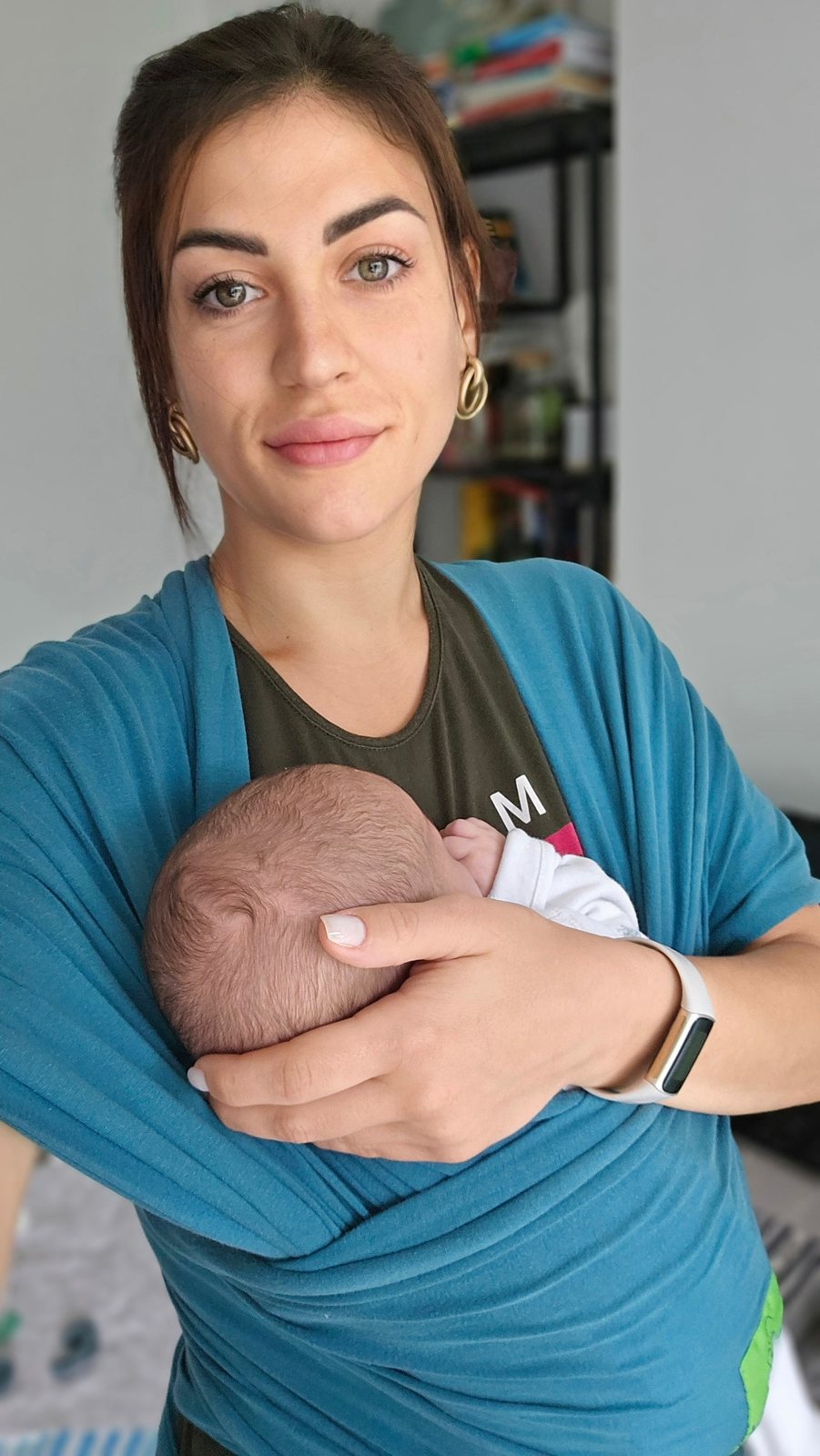
Если вам проще по-русски
Я Валентина, доула в Лондоне с 2014 года. Работаю на русском, украинском и английском. Помогаю разобраться, как устроены роды в Великобритании, готовлю к ним и сопровождаю в родах — а после родов приезжаю домой в первые недели.
Здесь можно спрашивать всё и на своём языке. Даже то, что кажется глупым — особенно то, что кажется глупым.
Why the language matters more than people expect
Women tell me this afterwards, almost word for word, again and again: «my English is fine — and then somewhere in the middle of it, it wasn't».
It isn't about your level of English. It is what happens to anyone under that much sensation and adrenaline: the second language goes first. You can hold a work meeting in English on Monday and still, at four in the morning in a room full of strangers, find that the words have left you — at exactly the moment somebody is asking you to make a decision.
And there is a quieter version of the same problem. You understand every word and still have no idea what is actually being proposed, because the sentence assumes you grew up here. «We'd like to pop a monitor on», «we'll get you on the ward», «the reg will come and have a chat» — none of that is difficult English. It is simply a system talking to itself.
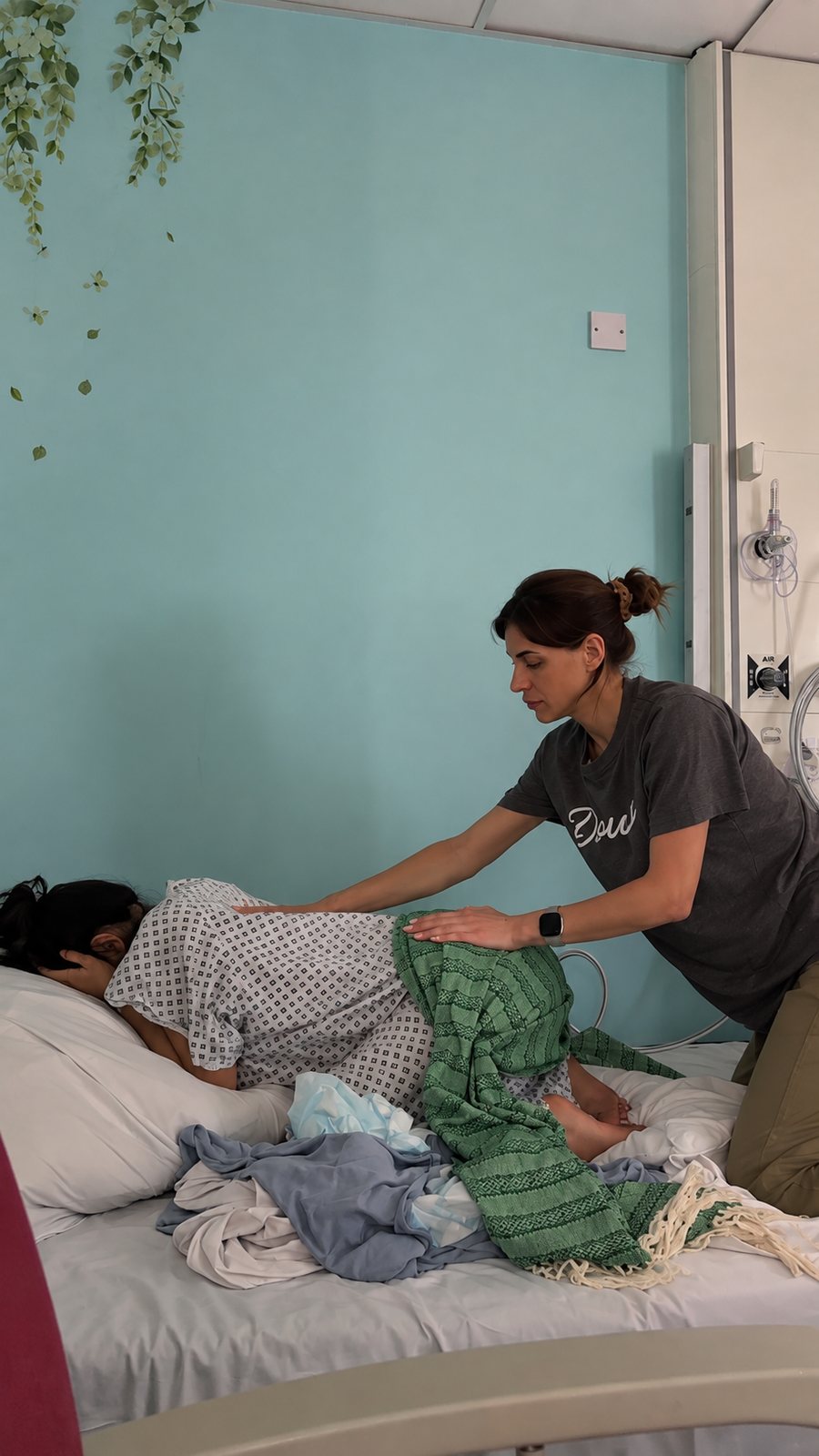
I am not your interpreter
I want to be straightforward about this, because it matters for your safety.
I am not a medical interpreter and I will not act as one. If you need interpreting for clinical conversations, your hospital has to provide it — you can ask for an interpreter at any appointment and during labour, and it costs you nothing. Please do ask. It is your right, not a favour.
What I do is the other half of the problem. An interpreter translates the sentence. They cannot tell you that you have twenty minutes to think about it, that this is a routine offer rather than an emergency, or that the same thing is done differently one hospital along. That part is my job, and we do most of it long before the day.
What I explain, before any of it happens
HOW MATERNITY CARE IS STRUCTURED
Who your community midwife is and what she is for. What triage is. The difference between a labour ward, a midwife-led birth centre and a home birth — and the fact that with a healthy pregnancy the birth centre is a choice you are entitled to make, not an exception you have to argue for.
WHAT IS ACTUALLY YOURS TO DECIDE
Almost everything, and far more than most women realise. Nothing can be done to you without your agreement. You may ask for time, ask for the reasons, ask what happens if you wait, and say no. We rehearse the sentences, in English, until they are easy to say.
THE APPOINTMENTS AND THE WORDS
What the scans are, what the midwife appointments are for, which letters and numbers matter and which are routine. The vocabulary you will meet — in both languages, so it is familiar long before anyone says it to you in a corridor.
YOUR BIRTH PREFERENCES
We write them together: what you want, what you would rather avoid, and — the part almost everyone leaves out — what matters to you if the plan has to change. One page, in English, in words your midwives will read in under a minute.
Being far from home is the other half of this
A lot of women go through birth and the first weeks here with no support around them at all — no family nearby, no close friends, no one to call at two in the morning.
You are discharged after a day or two and you go home, to a partner who has a few days off work and then goes back to it. Everything that comes next — the feeding, the nights, the recovery, the not knowing whether any of this is normal — happens with nobody to ask.
That is a large part of what I actually do, and it is the part nobody puts on a list. Being with someone who knows what you mean when you say it — who understands the way you were raised to think about birth, and doesn't need any of it explained — takes a weight off that is hard to describe until it is gone.
And I do know what it is to give birth in a system that wasn't explained to me. Even with all my training, I was the woman in that room who wasn't being heard, who said what they wanted to hear because it was easier than saying the true thing. That is the reason I do this work the way I do it.
How I can support you
Birth doula
Preparation in your language, someone beside you through the whole of labour, and the first hours with your baby. On call from 38 to 42 weeks.
Read morePostnatal doula
Days and nights at home in the first weeks — feeding, recovery, sleep, and someone to talk to who understands how alone this can feel here.
Read morePreparation only
Three sessions for you and your partner, in Russian or Ukrainian: how the system works, your choices, breathing and pain relief, and birth preferences you write yourself.
Read moreWhat a doula actually does · About me and my training · Practical questions
What families say
So grateful to Valentina for her incredible support throughout my pregnancy, birth, and postnatal period. Her calm presence, knowledge, and genuine care made such a difference at every stage. I truly couldn't have asked for better support.
— Katerina CalpaneThis was my first birth, and I was very nervous and completely unsure how to handle children. Valentina was incredibly helpful and taught me a lot about childcare, and she also helped me get used to this completely new role. My baby even began to recognise her and was very happy when she came. If I have a second child, I will definitely contact Valentina again.
— Alexandra BakroShe is a really nice, professional specialist. She knows her job and gives a lot of support. She answered all my questions and I was not nervous. It was my first pregnancy and I took a course with her, so I understood all the stages and knew what to expect.
— Olga BelenkayaQuestions I am asked most
Do you speak Russian and Ukrainian?
Yes, both, and English. We can prepare entirely in Russian or in Ukrainian — whichever you are more comfortable thinking in — and I speak to your midwives in English.
Will you be my interpreter in labour?
No, and I want to be clear about that. I am not a medical interpreter and it would not be safe for me to act as one. If you need interpreting for clinical conversations, your hospital must provide it — you can ask for an interpreter at any appointment and in labour, and it is free. What I do is different: I explain how everything works beforehand, in your language, so that during labour you are not hearing these words for the first time.
I have lived here for years and my English is good. Do I still need this?
Possibly not. But nearly every woman I have worked with has told me the same thing afterwards: somewhere in the middle of labour, English stopped being easy. That is not about your level of English. It is what strong sensation and adrenaline do to a second language. Having someone who can drop into your first language when you need it costs you nothing and changes a great deal.
Can I have a doula if I am giving birth on the NHS?
Yes. A doula is not part of the hospital team — I come with you as your birth partner. Most London units are used to doulas. If your hospital has a rule about how many birth partners they allow, we look at it together well before the day.
What if I am not sure how the system works at all?
Then that is exactly where we start, and there is no such thing as a silly question here. Community midwife, triage, labour ward, birth centre, home birth, the appointments and the scans, what you may choose and what you may decline. Most of it is not complicated once someone sits down and explains it to you in your own language.
Do you work with Ukrainian families who came here recently?
Yes. Some of the families I work with arrived in Britain within the last few years, often without their mothers, sisters or friends nearby. That is precisely the gap a doula fills.
Let's talk — in Russian, Ukrainian or English
Thirty minutes, free, no obligation. Ask me anything you like, in whichever language is easiest. By the end you will know whether I am the right person for your birth.
